The Bridge Method — Child & Parent Coaching by Meera Shah · Surat & Online

Your child isn't giving you a hard time.
They're having a hard time — and no one ever taught them the words for it

One-to-one coaching for children aged 3–30(every stage needs a different kind of parenting) — and honest guidance for their parents — that rebuilds the conversation between you. No lectures. No labels. No judgment of your parenting.

Prefer to read first? Keep scrolling — everything is explained below, including the fee.

15+ Years of This Work
300+ Children Sat With
8 Families a Month
Who Is Talking to You

No team. No recordings. You work with me.

I'm Minash — a child & parent coach trained in developmental psychology and certified parenting coaching, based in Surat. If we work together, you work with me.

15+ Years Coaching Families
300+ Children Who "Won't Talk"
8 Families a Month, Personally
100% First-Session 
Parent standing in the doorway at night
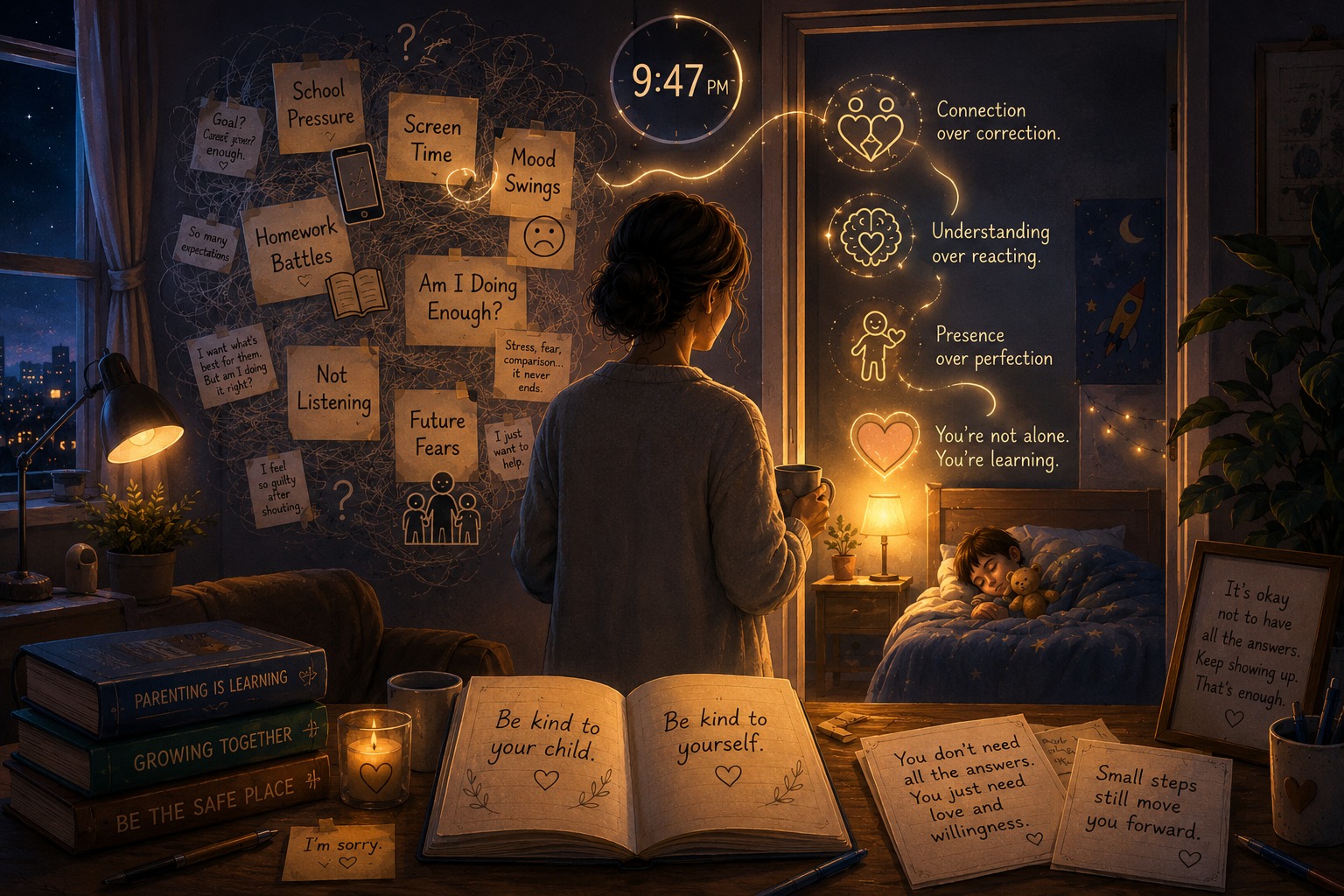
It's 9:47 at Night

The house is finally quiet.
And you're standing in the doorway.

You're watching them sleep, and replaying the evening. The homework that ended in tears — theirs or yours. The door that closed a little too hard. The "I'm fine" that clearly wasn't. The moment you heard your own parent's voice come out of your mouth, and hated it. And the question that never makes it out loud: "When did talking to my own child become this difficult?" If this is roughly your 9:47 PM — you're in the right place. You've already tried everything a good parent tries:

Talking calmly
Talking firmly
Taking the phone away
Giving the phone back
Rewards
Consequences
Backing off
Leaning in
Tuition
The parenting book on the nightstand

Here's the pattern hiding under all of it: every approach tried to change your child's behavior. None of them translated what the behavior was saying. You weren't failing. You were answering a message written in a language no one taught either of you.

You are not a bad parent.
And your child is not a problem to be fixed.

The Hidden Problem

What you see is 10% of what's going on.

01 The Message

Behavior is a language

The anger, the silence, the procrastination, the "I don't care" — these aren't the problem. They're the message. Nobody taught children how to say "I'm overwhelmed" or "I'm scared of disappointing you" — so they say it the only way they can.

How we work on this
02 The Iceberg

Below the waterline

Backchat, slammed doors, "I'm fine," endless screens — that's the top of the iceberg. Underneath: fear of disappointing you, a feeling with no name yet, needing control of something — anything. Schools grade the top. Coaching works below.

How we work on this
03 Warm Science

The brain they're driving

The prefrontal cortex — emotions, impulses, long-term thinking — is under construction until roughly age 25. The amygdala — big feelings — is online from early childhood. Your child is a powerful emotional engine driving with brakes still being installed.

How we work on this
04 Trainable

Calm is borrowed first

Children don't learn to regulate emotions by being told to. They learn by borrowing calm from an adult who stays steady beside them — psychologists call it co-regulation. That is trainable. It's the core of what we do, with your child and with you.

How we work on this

The quiet cost of waiting

Schools measure what's easy to measure. Marks, ranks, attendance. But the things that will actually decide your child's adult life — being able to name a feeling, ask for help, recover from failure, hold a friendship, disagree without exploding — never appear on a report card. No one is teaching them. They're expected to be absorbed, somehow, on the way to the exam hall.

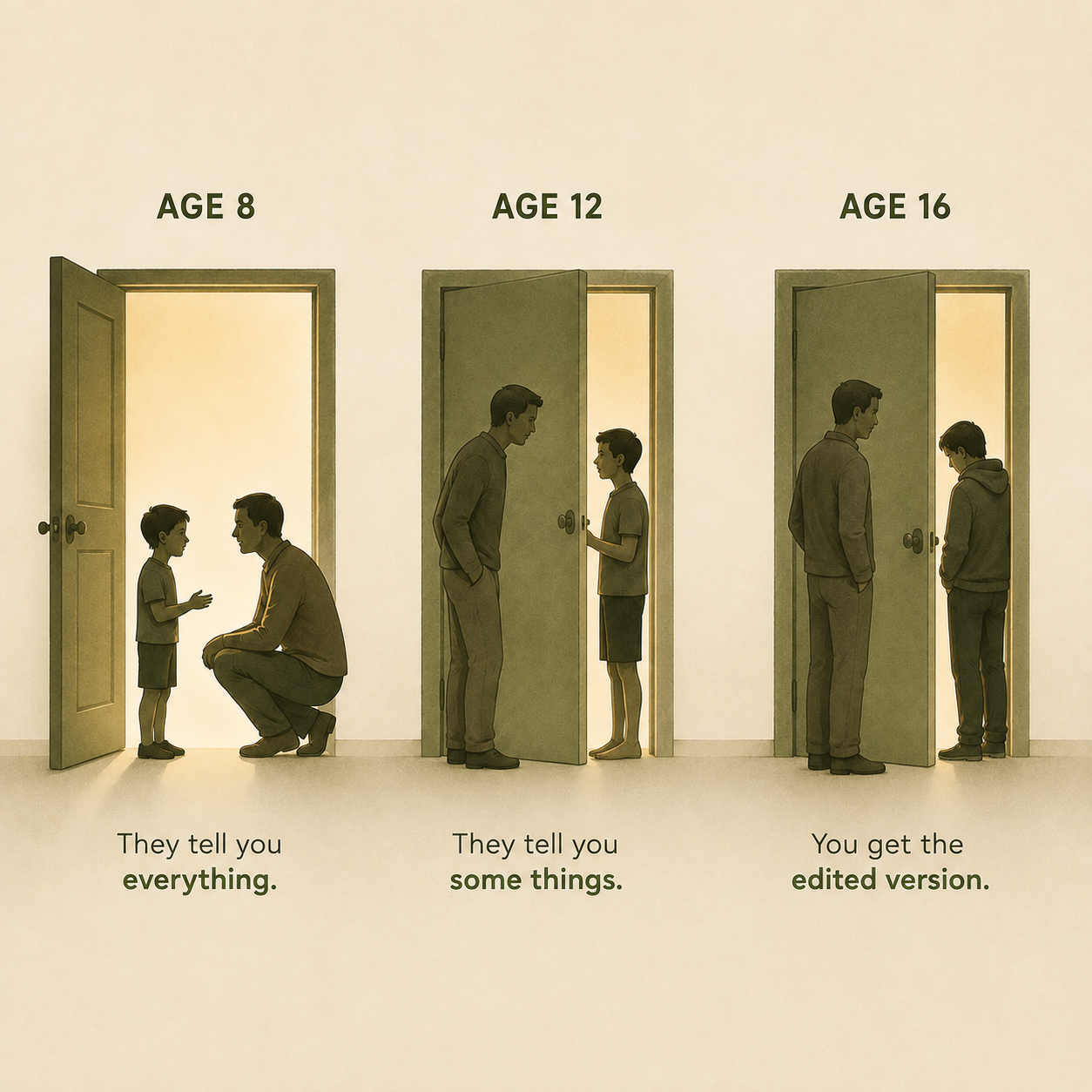
And here's the honest part, said gently: the door doesn't stay open at the same width forever . At eight, a child tells you everything. At twelve, they tell you some things. At sixteen, you get the edited version — unless the habit of talking to you was kept alive in between.

The quiet cost of waiting

The first step is one conversation →
Free · 20 minutes · an honest answer, even if it's "not a fit"

Honest Fit

Who this is for — and honestly, who it isn't.

❌ Not the right place if…

  • You're looking for marks-improvement tuition
  • You want your child "handled" without your involvement
  • Your child is facing clinical challenges — a licensed clinician comes first

✅ This will fit if…

  • Your child is 3–30 (every stage needs a different kind of parenting)
  • The connection at home has gone quiet, tense, or explosive
  • You're willing to be part of the process — debriefs are not optional
  • You want change that lasts past the program
  • You'd rather hear "not a fit" than a pitch

If some part of this page sounds like your house — the roadmap call was made for you.

A gentle note: if your child is facing self-harm, an eating disorder, suspected clinical depression or similar, you need a licensed clinician first — and on our call I'll say so plainly and help you find one. Coaching complements clinical care; it never replaces it.

See if this fits your family →
Free · 20 minutes · 8 families a month

Meet MINASH

I remember
the silence.

"I didn't start this work because I had answers. I started because I remember the silence."

Minash in a coaching session

Over the past 15 years I've sat with 300+ children who "won't talk," "won't listen," or "have changed" — and with the parents who love them and don't know what to do next. I take 8 families a month, personally. No team of junior coaches, no recorded course pretending to be coaching.

15+ Years
300+ Children
8 Families/mo

Chapter 01

The Quiet Chair

A child in my own family went quiet — a bright, funny girl who, somewhere around twelve, folded inward. Everyone said "phase." Everyone was busy. One chair at a full dinner table might as well have been empty.

Chapter 02

Looking for the Words

 I went looking for the words nobody at that table had.

Chapter 03

15 Years of Low Tables

Sitting across from 300+ children who "won't talk" — until I understood the thing that changed everything.

Chapter 04

The Translation

Children don't need fixing. They need translating — and parents need to be let in on the translation.

The Mission

The Bridge Method

Built not to raise toppers, but so no child sits at a full dinner table feeling alone — and no parent stands in a doorway at 9:47 PM feeling like they've failed.

The First-Conversation Promise

Five promises
before you pay anything.

The first step is a free 20-minute roadmap call. Here's what you can hold me to:

  • The roadmap call is free and honest — twenty minutes. If I don't believe I can genuinely help your family, I'll tell you on that call and point you somewhere better. No pitch theatrics.
  •  You'll always know where we stand. —  You'll receive honest feedback throughout the journey—including when progress is slower than expected or when I believe a different approach is needed.
  • I never promise to change your child — no honest professional can. I promise the process, my full attention, and the truth at every step — including "this is working slower than expected" if that's the truth.
  • Every child deserves a different approach.  — There are no scripts or one-size-fits-all solutions. Every plan is built around your child's unique needs.
  • My goal isn't to impress you. It's to understand your child. — I spend more time listening than promising, because lasting change starts with understanding—not assumptions.

The roadmap call will also tell you honestly whether there's anything underneath at all — including "your child is genuinely fine," which I say more often than you'd think.

Free · 20 minutes · Zoom / phone · I reply within one working day

The Bridge Method

Three phases.
One bridge.

Not a syllabus. Not moral lectures. A structured, personal The process — and the bridge is built from both sides : I work with your child, and with you in parent debriefs. Meeting in the middle.

Decode Reconnect Grow
See the PROCESS in detail
How It Actually Works

The Process — and what they honestly feel like.

Real change in children is not a lightning bolt. Here is the structure, and the honest arc of the first process.

Phase 1 

Decode

I earn your child's trust first — through conversation, play and projective activities that let children say sideways what they can't say directly. You receive a written "map" of what's actually driving the behavior you see at home. Most parents tell me this document alone changed how they saw their child.

Phase 2 

Reconnect

Your child learns the skills nobody taught them: naming emotions, handling frustration, asking for help, repairing after a blow-up. In parallel, you and I meet in parent debriefs — because the bridge is built from both sides. You'll get the exact words, and the exact silences, that reopen conversation at home.

Phase 3 

Grow

We convert breakthroughs into habits: confidence rituals, a family "repair protocol" for bad days, and a plan for the next school year. Then I step back — because the goal was never for your child to need me. It was for them to have you.

 The Honest Arc

The Wall

Your child may be reluctant, monosyllabic, "fine." Normal. Trust is being tested before it's given.


The Crack

They mention something from a session, unprompted, in the car. You'll want to react big. (We'll have prepared you not to.)


The Turn

Fewer explosions — and shorter ones, with repair afterwards. One evening, a real conversation happens and feels almost ordinary. It isn't. It's everything.


The New Normal

Homework still isn't their favorite thing (they're a child, not a robot). But the door is open, the jokes are back, and 9:47 PM feels different — you're not replaying fights, you're just watching them sleep.

Everything included:   child sessions  ·     The Decode Map · between-session activity kit · The Repair Protocol · message access · closing roadmap session.

Start with the free roadmap call →

Three Families · Parent Voices

"A family
like ours."

Real families, anonymized and shared with consent. Every child and home is different — these are individual experiences, not promises.


The Belief Underneath

Children don't need fixing.
They need translating.

— and parents need to be let in on the translation. Most help picks a side: fix the child, or lecture the parent. The bridge is built from both sides , meeting in the middle.

Because the goal was never for your child to need me. It was for them to have you .

The Honest Ten

Questions parents
actually ask.

"My child refuses to talk to strangers — this will never work."

The most common opening line I hear, usually about children who are chatting with me. I don't interrogate children; we build trust sideways — through games, drawing, stories. Reluctance is expected and planned for.

Is this therapy?

No. Therapy treats clinical conditions and is done by licensed clinicians — if your child needs that, I'll tell you and help you find one. Coaching builds emotional skills and repairs communication in non-clinical situations. Many families use both.

Will everything my child says be reported to me?

No — and that's for you. Children only open up under confidentiality. You'll always know themes, progress, and anything safety-related immediately. You'll never get a transcript, because then there'd be nothing worth transcribing.

We're a busy family. What's the real time cost?

One child hour a week, one parent hour a fortnight, and small daily habits that replace arguments rather than adding tasks. Most parents report gaining time — fights are expensive.

What if both parents aren't on board?

Common. One aligned parent is enough to start; the debriefs often bring the second one in.

How is this different from free advice online?

Advice is generic; your child isn't. The value here isn't information — it's a trained outsider your child will actually talk to, and a map of your specific child.

My child is "fine" — just quiet/lazy/glued to a screen. Overreacting?

Quiet, "lazy," and glued-to-screen are the three most common tops of the iceberg. The roadmap call will tell you honestly whether there's anything underneath — including "your child is genuinely fine," which I say more often than you'd think.

What ages?

3-30(every stage needs a different kind of parenting). The method adapts by age — play-based at the younger end, respect-based at the teen end.

What happens after the program ends?

You keep the Decode Map, the Repair Protocol, and the skills. Alumni families get a check-in . The exit plan is designed on day one — dependency is a failure state here.

How fast can we start?

After the roadmap call, most families begin within process, subject to the monthly intake.
Book the free roadmap call →
Free · 20 minutes · an honest answer, even if it's "not a fit"

The Next Step

Tell me about
your child.

You've read this far because some part of this page sounded like your house. So here's the whole next step: three questions, two minutes, and I read every word myself. I personally reply within one working day, and the roadmap call we book costs nothing but twenty minutes of honesty.

  • Free 20-minute call
  • Reply within one working day
  • "Not a fit" is a real answer
  • First-session refund promise

And if tonight you do only one thing: when you check on them before you sleep — stay an extra thirty seconds. That's where every bridge starts.

Free Roadmap Call

Send this to Minash

This Process intake closes in

12 Days
00 Hours
00 Minutes
48 Seconds

Free · no obligation · an honest answer, even if it's "not a fit"

⚠️ Disclaimer: The Bridge Method (Minash) offers child & parent coaching — emotional-skills and communication coaching for non-clinical situations. It is not therapy and not a substitute for medical or psychological treatment. No specific behavioural or personal outcomes are guaranteed — every child and family is different, and results depend on participation. Stories shared are individual, anonymized experiences used with consent. If your child is in crisis — self-harm, an eating disorder, suspected clinical depression or similar — please contact a licensed mental-health professional or emergency services first. Coaching complements clinical care; it never replaces it.